Jun 16, 2026 · ScienceDaily
What SETI Signal Drift Can Teach Developers About Detection Pipelines
A new SETI study suggests alien radio signals could be smeared by stellar activity before reaching Earth. For developers, it is a useful reminder: real-world inputs rarely arrive in the clean shape our systems expect.
Curated coding article
Summary
A new SETI study suggests alien radio signals could be smeared by stellar activity before reaching Earth. For developers, it is a useful reminder: real-world inputs rarely arrive in the clean shape our systems expect.
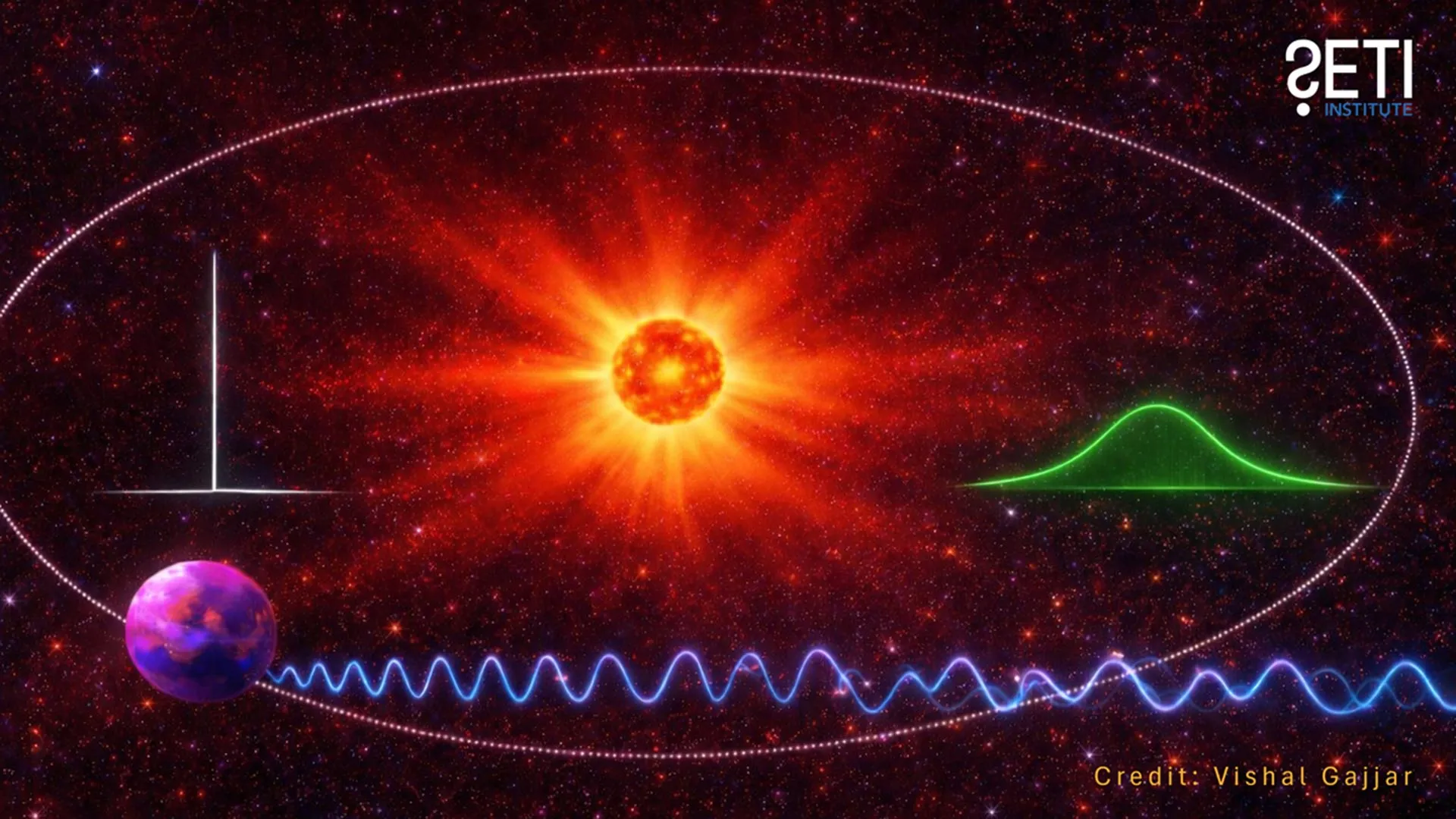
SETI researchers often search for very narrow radio-frequency spikes because they are unlikely to be produced by ordinary cosmic noise. A recent study adds a complication: stellar winds, plasma turbulence, and coronal mass ejections near a signal’s home star could widen that signal before it ever travels across interstellar space.
That idea has a strong software parallel. Many detection systems are built around ideal signatures: exact thresholds, crisp patterns, clean schemas, stable latency, or predictable image features. But production data behaves more like space weather. It shifts, degrades, and arrives with context-specific distortion.
For developers working with AI, observability, fraud detection, audio analysis, or telemetry pipelines, the lesson is practical: do not only optimize for the cleanest possible signal. Test against broadened, delayed, partial, noisy, and environment-altered versions of the thing you are trying to detect.
The study also points to smarter calibration. Researchers used radio transmissions from spacecraft in our own solar system to estimate how plasma affects narrowband signals, then applied that framework to other star systems. In software terms, this is like using known-good production traces to model failure modes before they appear at larger scale.
M-dwarf stars, which make up about 75% of the Milky Way’s stars, may be especially challenging environments for narrow signal detection. For a developer portfolio project, this could inspire a Three.js or WebGL visualization that lets users adjust stellar activity and watch a sharp signal spread across frequency bands.
The bigger takeaway: resilient systems should search for what actually arrives, not just what was originally emitted. Source: https://www.sciencedaily.com/releases/2026/06/260615033851.htm